Insights

Why The First AI Product Doesn’t Have To Be A Prototype

Abstract illustration showing AI product development workflows, with evolving digital product stages, iterative build cycles and real-time user feedback loops replacing traditional prototype-based development approaches

AI has changed what a first version of a product can be. Traditionally, prototypes played an important role in product development because they helped teams explore ideas, test interactions and reduce risk before committing to a full build. It obviously made a lot of sense when building software was expensive and time-consuming.

Today, that has changed. AI has significantly reduced the time and cost involved in building digital products, making it possible to move beyond demonstrations and mock-ups much earlier in the process. Instead of creating something that simply illustrates an idea, organisations can put a working product in front of users, learn from how it is used and continue improving it over time.

The distinction matters because the words we use influence how organisations think about product development. Once something is labelled a prototype, it is often treated as temporary. Teams assume it will be rebuilt, investment decisions are delayed because the “real” product is still considered to be ahead, and organisations can find themselves moving from prototype to MVP to production even when much of the learning could have happened within a single product that evolves over time.

A working product changes that dynamic. Each round of feedback contributes to something that continues to evolve rather than something designed to be replaced. Investment is directed towards a product that grows with every iteration instead of one expected to be discarded. Rather than treating early development as a disposable phase, organisations can begin learning from a product that evolves alongside their understanding of users, workflows and opportunities.

Prototypes still play an important role in exploring ideas, testing interactions and validating assumptions before meaningful investment is made. The difference is that AI makes it possible to move much more quickly from exploration to something real. Rather than validating ideas with artefacts designed to be discarded, organisations can increasingly learn from products designed to evolve.

At Studio Graphene, we focus on getting working products into the hands of users as early as possible because the fastest way to validate an idea is through real usage. AI makes that possible much earlier than before, allowing organisations to learn faster and shape a product as it develops rather than restarting from a prototype stage.

spread the word, spread the word, spread the word, spread the word,
Developer experience as a measure of software delivery performance.
Development

Developer Experience Is a Delivery Metric

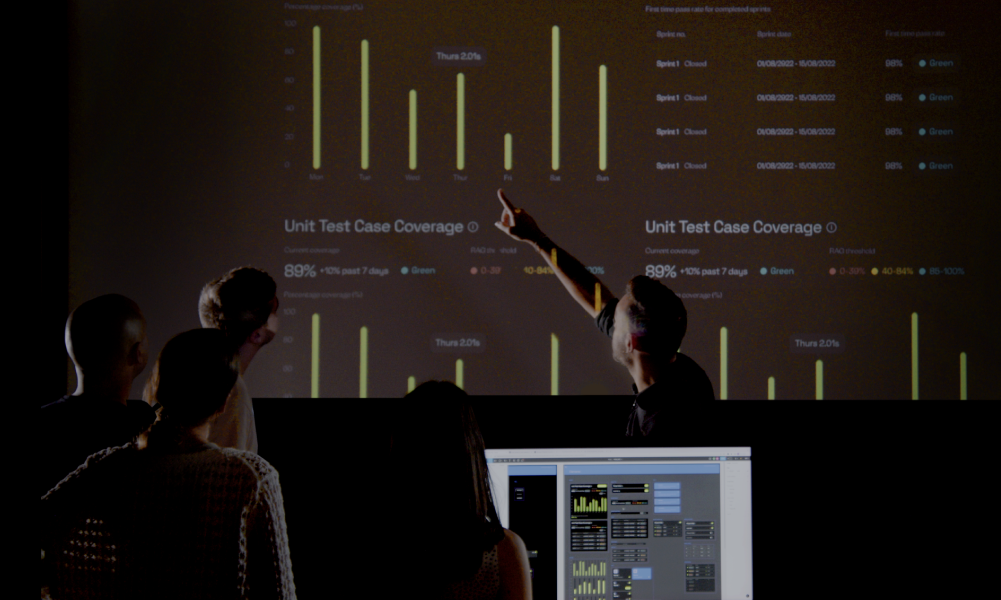
People analysing Pulse delivery performance data displayed on a large screen, with laptops in front of them.
AI

We Built an MCP Server for Pulse and Stopped Building Our Chatbot

Measuring the impact of agentic development on software delivery, from developer effort and code quality to team throughput.
AI

How Do You Know Agentic Development Is Making Delivery Better?

Diagram illustrating Studio Graphene’s multi-agent code review workflow, with separate agents checking code quality, security and engineering standards before findings are challenged and reviewed by an engineer.
AI

Can AI Agents Really Review Each Other’s Work?

Illustration representing AI agents writing code alongside developers overseeing the software development process and making key engineering decisions.
AI

When AI Agents Write the Code, What Do Developers Actually Do?

Developer Experience Is a Delivery Metric

Developer experience as a measure of software delivery performance.
Development

Developer Experience Is a Delivery Metric

We Built an MCP Server for Pulse and Stopped Building Our Chatbot

People analysing Pulse delivery performance data displayed on a large screen, with laptops in front of them.
AI

We Built an MCP Server for Pulse and Stopped Building Our Chatbot

How Do You Know Agentic Development Is Making Delivery Better?

Measuring the impact of agentic development on software delivery, from developer effort and code quality to team throughput.
AI

How Do You Know Agentic Development Is Making Delivery Better?

Can AI Agents Really Review Each Other’s Work?

Diagram illustrating Studio Graphene’s multi-agent code review workflow, with separate agents checking code quality, security and engineering standards before findings are challenged and reviewed by an engineer.
AI

Can AI Agents Really Review Each Other’s Work?

When AI Agents Write the Code, What Do Developers Actually Do?

Illustration representing AI agents writing code alongside developers overseeing the software development process and making key engineering decisions.
AI

When AI Agents Write the Code, What Do Developers Actually Do?

Developer Experience Is a Delivery Metric

Developer experience as a measure of software delivery performance.

We Built an MCP Server for Pulse and Stopped Building Our Chatbot

People analysing Pulse delivery performance data displayed on a large screen, with laptops in front of them.

How Do You Know Agentic Development Is Making Delivery Better?

Measuring the impact of agentic development on software delivery, from developer effort and code quality to team throughput.

Can AI Agents Really Review Each Other’s Work?

Diagram illustrating Studio Graphene’s multi-agent code review workflow, with separate agents checking code quality, security and engineering standards before findings are challenged and reviewed by an engineer.

When AI Agents Write the Code, What Do Developers Actually Do?

Illustration representing AI agents writing code alongside developers overseeing the software development process and making key engineering decisions.