Insights

How To Write Better AI Prompts: Prompt Engineering For Humans

Studio Graphene team using AI-driven dashboards on Pulse platform to generate actionable delivery insights.

We use Pulse, our delivery intelligence platform, to put prompt engineering into practice. Prompts feed into ‘human in the loop’ workflows that flag anomalies in delivery metrics. Product managers review and validate the outputs, so the AI element highlights what’s relevant, actionable and trustworthy. By combining AI speed with human judgment, teams focus on the right problems, faster.

AI works best when it’s set up for success. Vague or inconsistent prompts can turn it into a guessing game. Well crafted prompts make it reliable, useful and aligned with the problem you’re actually trying to solve. This is where prompt engineering moves from being a technical trick to what is quickly becoming a very important and practical design discipline - shaping the interaction so people get the answers they actually need.

Good prompts give context, define scope and specify the format you want. They’re tailored to the business problem and refined iteratively. The more precise you are, the more actionable the outputs become. As we always say AI is a partner and most certainly not a mind reader. We’ve found that even small changes like adding the role the AI should assume or clarifying the data source, can turn a vague response into a clear, decision-ready insight.

Common mistakes include asking vague questions, overcomplicating instructions, expecting AI to guess context or treating the first output as perfect. These often slow progress and reduce confidence in the insights AI provides. It’s easy to get wowed by novelty, but without clarity in how you ask, the outputs can quickly lose their edge.

To get better outputs, include role and context, specify the expected format, review and adjust iteratively and test quickly in short cycles. Small refinements in how you phrase prompts can drastically improve speed, clarity and usefulness. In other words treat prompts like any other design process - prototype, test, refine.

At Studio Graphene, we see prompt engineering as a way to make AI a dependable partner. Done well, it speeds up research, coding and operational monitoring - giving teams insights they can trust and act on without second guessing the AI. The goal isn’t to master clever hacks, but to build a repeatable way of working where AI genuinely supports people, not the other way around.

spread the word, spread the word, spread the word, spread the word,
Developer experience as a measure of software delivery performance.
Development

Developer Experience Is a Delivery Metric

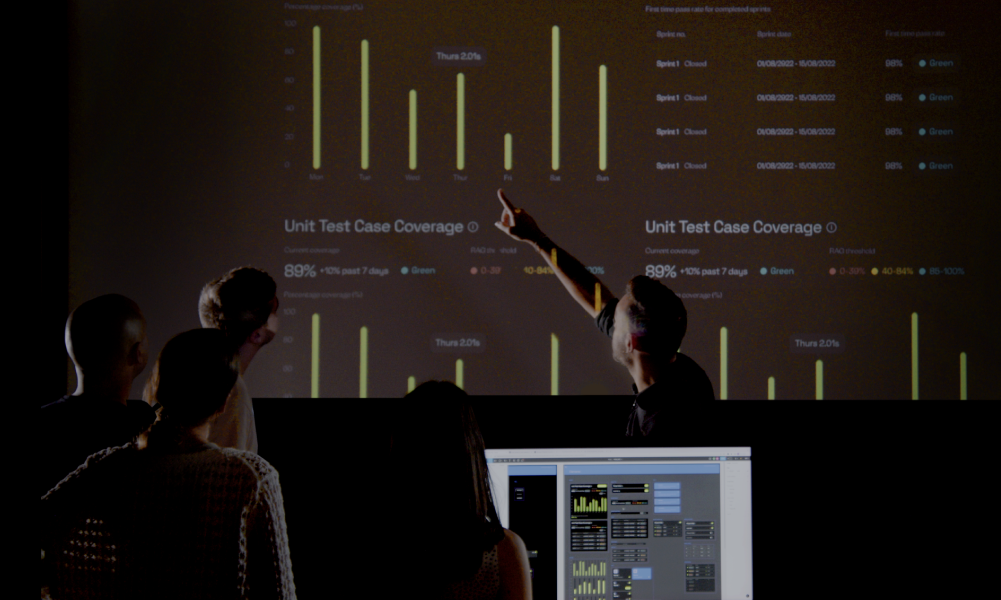
People analysing Pulse delivery performance data displayed on a large screen, with laptops in front of them.
AI

We Built an MCP Server for Pulse and Stopped Building Our Chatbot

Measuring the impact of agentic development on software delivery, from developer effort and code quality to team throughput.
AI

How Do You Know Agentic Development Is Making Delivery Better?

Diagram illustrating Studio Graphene’s multi-agent code review workflow, with separate agents checking code quality, security and engineering standards before findings are challenged and reviewed by an engineer.
AI

Can AI Agents Really Review Each Other’s Work?

Illustration representing AI agents writing code alongside developers overseeing the software development process and making key engineering decisions.
AI

When AI Agents Write the Code, What Do Developers Actually Do?

Developer Experience Is a Delivery Metric

Developer experience as a measure of software delivery performance.
Development

Developer Experience Is a Delivery Metric

We Built an MCP Server for Pulse and Stopped Building Our Chatbot

People analysing Pulse delivery performance data displayed on a large screen, with laptops in front of them.
AI

We Built an MCP Server for Pulse and Stopped Building Our Chatbot

How Do You Know Agentic Development Is Making Delivery Better?

Measuring the impact of agentic development on software delivery, from developer effort and code quality to team throughput.
AI

How Do You Know Agentic Development Is Making Delivery Better?

Can AI Agents Really Review Each Other’s Work?

Diagram illustrating Studio Graphene’s multi-agent code review workflow, with separate agents checking code quality, security and engineering standards before findings are challenged and reviewed by an engineer.
AI

Can AI Agents Really Review Each Other’s Work?

When AI Agents Write the Code, What Do Developers Actually Do?

Illustration representing AI agents writing code alongside developers overseeing the software development process and making key engineering decisions.
AI

When AI Agents Write the Code, What Do Developers Actually Do?

Developer Experience Is a Delivery Metric

Developer experience as a measure of software delivery performance.

We Built an MCP Server for Pulse and Stopped Building Our Chatbot

People analysing Pulse delivery performance data displayed on a large screen, with laptops in front of them.

How Do You Know Agentic Development Is Making Delivery Better?

Measuring the impact of agentic development on software delivery, from developer effort and code quality to team throughput.

Can AI Agents Really Review Each Other’s Work?

Diagram illustrating Studio Graphene’s multi-agent code review workflow, with separate agents checking code quality, security and engineering standards before findings are challenged and reviewed by an engineer.

When AI Agents Write the Code, What Do Developers Actually Do?

Illustration representing AI agents writing code alongside developers overseeing the software development process and making key engineering decisions.