Insights

AI Is Making Interfaces Less Visible. But Design Is Becoming More Important, Not Less

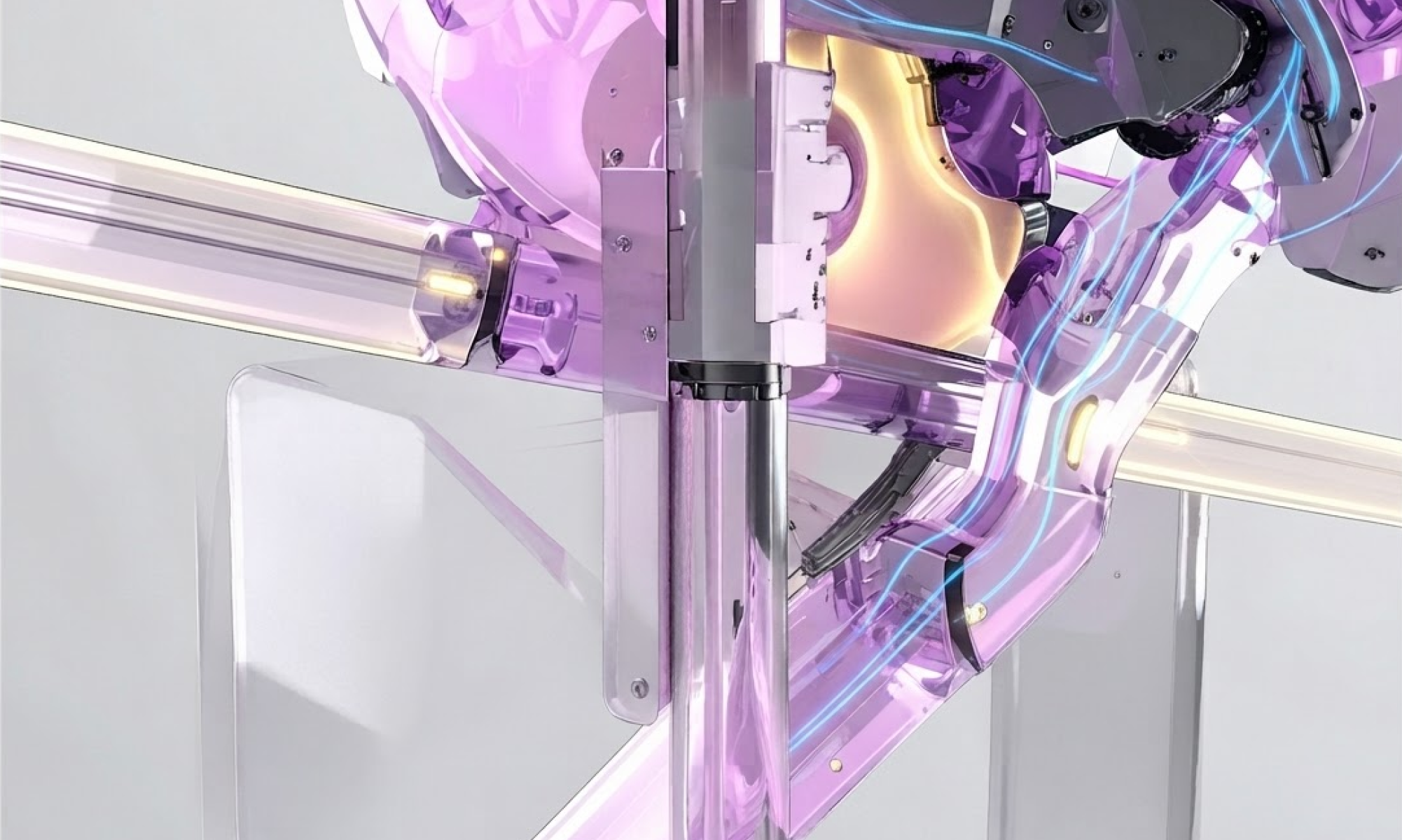
AI-driven digital interface showing reduced user interaction, with automated systems handling tasks in the background while users monitor outputs and decisions through a simplified dashboard.

AI is changing how people interact with digital products. Tasks that once required multiple steps across dashboards, forms or workflows can now be triggered or completed with far less direct input. Customer support queries are being resolved by AI agents, reports are being generated automatically and operational workflows are increasingly running in the background without users needing to step through each stage.

On the surface, this looks like simpler products with fewer visible interactions. In reality, the interaction hasn’t disappeared. It has shifted. Instead of doing the work inside a system, people are increasingly overseeing what the system is doing.

That changes what the interface is responsible for. It becomes less about execution and more about visibility, explanation and control. Users need to understand what the system is doing, why it is doing it and when they might need to step in.

In AI-driven systems, the interface is often no longer where tasks are completed. It is where they are reviewed, adjusted or approved. As automation increases, intervention becomes part of the normal flow. Users are not involved in every step, but they still need simple ways to correct or refine outputs when needed. Without that, automation quickly becomes difficult to trust.

This is where feedback becomes critical. Users need to see how a system arrived at an outcome, even at a high level. Whether that is a confidence score, a trace of inputs or a simple explanation of reasoning, these signals help people understand whether to accept, adjust or challenge what they are seeing. Without that layer of explanation, even accurate outputs can feel unclear or unreliable.

The real challenge is not removing interaction, but deciding when it should appear. Too much visibility slows things down. Too little creates uncertainty.

At Studio Graphene, this shows up most clearly in operational systems where automation is used to handle scale and complexity. Interfaces shift towards summaries, alerts and decision points rather than constant interaction. The interface becomes less visible, but its role becomes more important. It is what allows people to understand, trust and work with systems that are increasingly autonomous.
spread the word, spread the word, spread the word, spread the word,
Developer experience as a measure of software delivery performance.
Development

Developer Experience Is a Delivery Metric

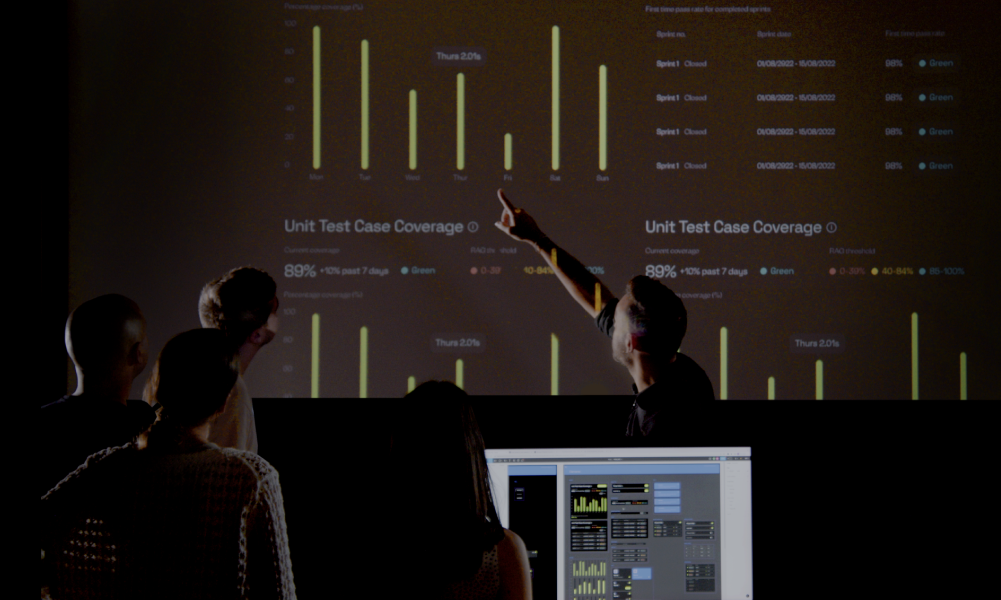
People analysing Pulse delivery performance data displayed on a large screen, with laptops in front of them.
AI

We Built an MCP Server for Pulse and Stopped Building Our Chatbot

Measuring the impact of agentic development on software delivery, from developer effort and code quality to team throughput.
AI

How Do You Know Agentic Development Is Making Delivery Better?

Diagram illustrating Studio Graphene’s multi-agent code review workflow, with separate agents checking code quality, security and engineering standards before findings are challenged and reviewed by an engineer.
AI

Can AI Agents Really Review Each Other’s Work?

Illustration representing AI agents writing code alongside developers overseeing the software development process and making key engineering decisions.
AI

When AI Agents Write the Code, What Do Developers Actually Do?

Developer Experience Is a Delivery Metric

Developer experience as a measure of software delivery performance.
Development

Developer Experience Is a Delivery Metric

We Built an MCP Server for Pulse and Stopped Building Our Chatbot

People analysing Pulse delivery performance data displayed on a large screen, with laptops in front of them.
AI

We Built an MCP Server for Pulse and Stopped Building Our Chatbot

How Do You Know Agentic Development Is Making Delivery Better?

Measuring the impact of agentic development on software delivery, from developer effort and code quality to team throughput.
AI

How Do You Know Agentic Development Is Making Delivery Better?

Can AI Agents Really Review Each Other’s Work?

Diagram illustrating Studio Graphene’s multi-agent code review workflow, with separate agents checking code quality, security and engineering standards before findings are challenged and reviewed by an engineer.
AI

Can AI Agents Really Review Each Other’s Work?

When AI Agents Write the Code, What Do Developers Actually Do?

Illustration representing AI agents writing code alongside developers overseeing the software development process and making key engineering decisions.
AI

When AI Agents Write the Code, What Do Developers Actually Do?

Developer Experience Is a Delivery Metric

Developer experience as a measure of software delivery performance.

We Built an MCP Server for Pulse and Stopped Building Our Chatbot

People analysing Pulse delivery performance data displayed on a large screen, with laptops in front of them.

How Do You Know Agentic Development Is Making Delivery Better?

Measuring the impact of agentic development on software delivery, from developer effort and code quality to team throughput.

Can AI Agents Really Review Each Other’s Work?

Diagram illustrating Studio Graphene’s multi-agent code review workflow, with separate agents checking code quality, security and engineering standards before findings are challenged and reviewed by an engineer.

When AI Agents Write the Code, What Do Developers Actually Do?

Illustration representing AI agents writing code alongside developers overseeing the software development process and making key engineering decisions.